
At the core of the power struggle among states key to Middle Eastern stability and global balance is the question of who controls whose natural gas flow via whose territories. The United States, Russia, Turkey, Syria, and Iran are analyzed in this context to present how changing alliances have disrupted the regional balance in the Syria conflict. Given the stable hostility between the United States and Russia as well as the steady friendship between Russia and Syria, Turkey’s alliances and enmities are central in the formation of balances. Competition or disagreement between the United States and Russia over Kurdish independence in Syria could lead to a protracted conflict for years to come in the Middle East.
CYPRUS, A RUSSIAN FOOTHOLD IN THE CHANGING EASTERN MEDITERRANEAN
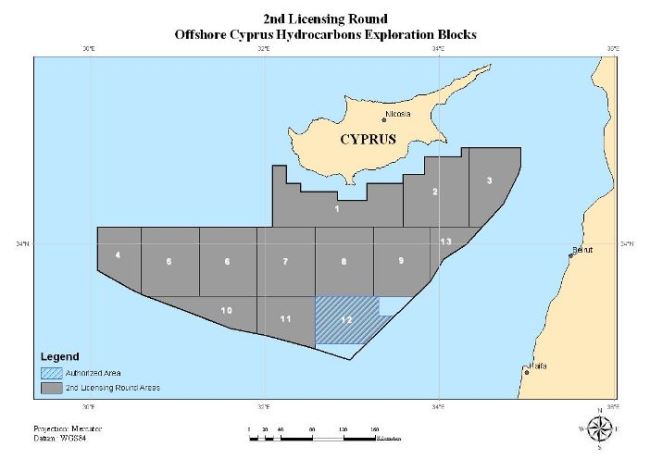
Russian interests in the Eastern Mediterranean have been highlighted both by the country’s diplomatic and naval activity related to the Syrian crisis as well as by its stance on economic and energy issues in Cyprus. During the 2000s, Moscow’s influence on the island has steadily increased, making Cyprus a new Russian foothold in the Eastern […]
RUSSO-TURKISH DIVERGENCE (PART II): THE ENERGY DIMENSION
Part I of this article is available here. Energy issues figure prominently in the Russo-Turkish relationship. Their impact is not nearly as clear-cut as are the Iranian and Syrian issues. Turkey and Russia have a complex, evolving relationship characterized by mutual dependencies in the oil and gas spheres. As Richard Weitz stated, “Energy relations between […]
RUSSO-TURKISH DIVERGENCE (PART I): THE SECURITY DIMENSION
Since the early 1990s, Turkey and Russia’s strategic outlooks have gradually been converging. The two countries have incrementally shed their mutual apprehensions and started a comprehensive and multifaceted cooperation. Turkish–Russian interaction in the Middle East, Caucasus, and Mediterranean reveals that there might be limits to the future expansion of their partnership. Russo-Turkish relations encompass […]