
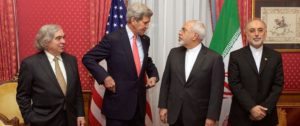
In recent years, it has become customary in much analysis of the Middle East emerging from Israel to divide Middle Eastern countries into a series of alliances or ‘camps.’ These camps are identified in a variety of ways. But the most usual depiction notes a tight, hierarchical bloc of states and movements dominated by the […]
Opening the “Gates of Evil”
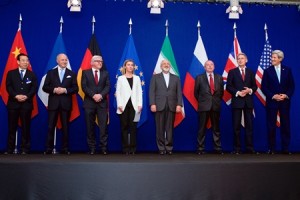
Sunni Arabs see deal as facilitating further Iranian regional subversion, confirming US withdrawal from the Middle East Jerusalem Post, 18/7 The response in the Arabic-speaking world to the conclusion of a deal between the P5+1 countries and the Islamic Republic … Continue reading →
A New Chapter in the Sunni-Shi’ite War
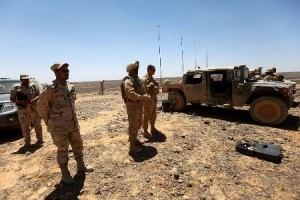
Jerusalem Post, 3/4 The assembling of a Sunni coalition to challenge the advance of an Iranian proxy in Yemen, and the subsequent announcement in Sharm al-Sheikh of the formation of a 40,000 strong Arab rapid reaction force are the latest … Continue reading →
Meanwhile on Israel’s Lebanese Border
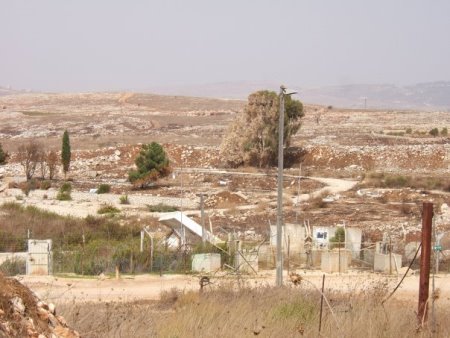
On December 15, an Israeli jeep was driving along the Israel-Lebanese border near the coast, in a quiet area, which hadn’t seen war for decades. Suddenly a shot rang out. A warrant officer fell dead, but he wasn’t killed by a “terrorist.” Apparently he had been shot by a uniformed soldier of the Lebanese army. Let’s consider this situation under the America’s supposed security protection of Israel.
Is Lebanon going to court martial this soldier? Is the United States going to demand that he be punished? Will the United States do anything? Remember that the U.S. will be subsidizing Iran, and who knows what else. Moreover, the United States will try to restrain any Israeli actions. This person is going to get away with murder, and no one will criticize him, but rather compliment him.
This is going to pose daily questions of U.S. policy (true I know this is a Lebanese not Palestinian soldier, but the principal is the same). What if the soldiers had been a few dozen miles away? The United States is obviously going to regret this action but is not going to do anything. It will try to restrain Israel. And meanwhile Lebanon, Syria, and other countries are going to act like they are at war with Israel, but the United States will not allow Israel to act like it is at war with them.
How about if Hizballah had shot the soldier. This means that an Israeli soldier was shot by what is a de facto ally of the United States. After all, the United States has likely provided Iran with some 20 billion dollars, cut sanctions, and won’t do anything about the situation. What do Israelis gain? A “frequent friar [Hebrew for sucker] card”?
Does the United States want to get into this situation, the middle of an Arab-Israeli conflict that has gone on for 66 years? As I have pointed out many times, this will be a disaster.
The current stage of peace negotiations are the following: The U.S. has offered American troops to be in the West Bank and Gaza Strip for 10 years. How many soldiers will there be? What is their designated mission? Do you really think the U.S. will have thousands of soldiers in Israel and Palestine for a decade? I don’t believe this will happen. I repeat, either this will be a disaster or will not happen.
Here is an interesting option. Suppose the Obama administration draws negotiations out to the end of 2014? Certainly parties would like to do that; they are in no hurry. Then negotiations are drawn out during the campaign, and then the day after voting, they collapse. Wouldn’t the Democratic Party achieve a great voter turnout, considering the Arab-Israeli conflict and the Iran conflicts are solved? And then Obama would announce that U.S. interests cannot make the concessions to create peace. In other words, he would get the value of the campaign slogans but then does not deliver.
In other words, if you want this conflict, you can keep this conflict. Don’t be surprised at this prediction.
Are Sunni Arabs More Afraid of Israel than Iran?

I’m surprised that the following coincidence was not connected to Purim. Once again an Iranian tyrant is threatening countries in the region, and it isn’t just Jews that are worried. In an absolutely remarkable historical event, President Shimon Peres delivered a speech to 29 representatives from Arab and Islamic states via satellite. Do not kid yourself; this would not have happened if the Egyptians, Saudis, and others hadn’t thought that the U.S. had sold out the Sunni Arabs.
“Everybody understood that this was something historic: the president of the Jewish state sitting in his office in Jerusalem with an Israeli flag and the foreign ministers sitting in the Persian Gulf discussing security, the war on terror and peace,” said one of the Arab organizing officials.
There are three themes to Peres’ speech. The threat of Iranian nuclear weapons on all the region’s nations, the dangers of radical Islamism, and the usefulness of making peace with Israel (of course he would talk about peace with Israel, but notice that this is not within the context of the Iranian threat). Another easy thing to miss is that simultaneously, the Israeli government said it would provide further details of how close Iran is to obtaining nuclear weapons. Another point that might be missed is the implication that Israel will share nuclear intelligence with other Arab-Muslim nations.
At a meeting between an Israeli ambassador and a very high-ranking Saudi official, the latter said, “Jerusalem must be liberated and Palestine must be an independent country. Okay, that’s out of the way, now let’s talk about everything else.”
The Arab-Turkish cooperation forum is still stalled. When Erdogan became prime minister, Turkey had good relations with Israel against the Arab states. Yet Erdogan is a Sunni Islamist supporting revolutionary Islamist groups, including the Muslim Brotherhood and Salafists. Because of this, he switched from relative support for Israel to support for revolutionary Islamists. But note the cost: This month a parliamentary candidate is openly running in a Marxist-Kurdish party. And in fact, the Kurdish Worker’s Party has been strengthened, especially in Syria.
There is, however, something more here, and believe it that the Saudis will listen and hear that the bill has been presented and Turkey expects to pay. At the same time, the Turkish ambassador has been expelled from Egypt, and Gulf Arabs are increasingly worried about continued Turkish support for the Syrian insurgency. In other words, Israel may claim the new Middle East politics better than Iran and even better than the United States. Obviously, Israel and Saudi Arabia are not going to carry out a joint attack on Iran or take any other drastic measures. Yet this may lead to other positive developments. Just don’t forget the old pattern. In a television broadcast, a senior Kuwaiti mullah said:
“Oh servants of Allah, how saddening and very painful it is to see many Muslim youths glued to TV screens at cafes or at home, passionately watching entertainment shows, like the football World Cup, in despicable subjugation to the abominations of the other nations–as if we were not a nation with a brilliant history and a lofty civilization…The Jews were successful in preoccupying the Muslim youth–except those protected by Allah–with the most inane matters, distracting them from important things…” –Shaykh Abd al-Muhsin al-Mutairi
None of this has changed the politics. It is for Arab public consumption. It would be too hazardous for an Arab government to accept Israel’s nationhood.
Finally, note that since Egypt is angry with Hamas–and Egypt and Israel are keeping peace in the Sinai–Hamas has more limited wartime capabilities. And Hizballah–because of its participation in the Syrian civil war–wants to avoid armed conflict with Israel. This situation seems to be the best that can be achieved in the region.
Obama’s Seven Premises About Islamist Terrorism and Revolution
So you want to understand Obama foreign policy? Ok, here is is, an explanation in clear, simple, and accurate form based on Obama’s recent speech at Fort McNair about terrorism: Obama Premise Number One: If one wanted to come up with a slogan for the Obama Administration regarding the “war on terrorism” it would be this: […]
- 1
- 2
- 3
- …
- 11
- Next Page »